When Dinosaurs Ruled: Why the OpenAI Jobs Platform Could Be An HR Tech Extinction Event

It’s fitting, really, that the beginning of the end for LinkedIn came with the arrival of an existential threat whose biggest investor also happens to be their outright owner, Microsoft – which is probably pretty awkward for a company whose post acquisition autonomy has created what turns out to be a pretty significant blind spot in their product roadmap.
In a poetic bit of corporate cannibalism, OpenAI (the ChatGPT people) announced this week that it’s building an “AI-powered hiring platform.”
Not a tool. Not a plug-in.
A full-stack hiring marketplace with matching, screening, certification, and employer tools built directly into the OpenAI ecosystem.
It’s called the OpenAI Jobs Platform. And it’s coming for LinkedIn’s lunch, dinner, and market share.

The real kicker? LinkedIn’s parent company, Microsoft, is also OpenAI’s sugar daddy. So no matter who wins this cage match, Satya Nadella gets a bonus and shareholders get a dividend. What’s not to like?
Plus, the days of LinkedIn having an effective stranglehold on the enterprise TA market are now numbered, and while it’s been a long time coming, the timing couldn’t have been more perfect.
That’s because the real twist (of the plot, and the knife)? The announcement came the same day LinkedIn finally rolled out its long-awaited AI Hiring Assistant, a lightweight Copilot feature that helps hiring managers draft job posts and screen candidates using Microsoft’s LLM stack.
OpenAI didn’t just launch a product. It launched a power move. And I, for one, am totally here for it.
Grab your popcorn, this is about to get good.
Hot or Bot: The Day LinkedIn Got Shut Out
Let’s be honest: LinkedIn’s Hiring Assistant is…on brand. It works, but isn’t particularly worthwhile. It adds a feature, but doesn’t add a ton of value. It does what Microsoft Copilot does best; generate decent, generic content with just enough context to save you time but not quite enough to trust blindly, and with just enough functionality to be “enterprise ready” and just enough bugs to be mildly infuriating.

You can ask it to write job descriptions, review applications, and suggest candidates. It adds some basic automation capabilities, but isn’t designed to be disruptive – rather, it’s a half-assed repackaging of product capabilities that already exist on LinkedIn and tied up with an AI bow.
OpenAI’s Jobs Platform isn’t trying to improve existing product functionality, nor is it designed to optimize existing hiring processes or improve legacy talent acquisition outcomes.
It’s trying to replace them entirely. It’s not trying to win the game, but rather, to reinvent the way in which its played, following the rules while simultaneously rendering them irrelevant.
At least, in theory. Some examples of how OpenAi will purportedly rewrite the fundamental rules of the recruiting game, not by beating the competition so much as forcing them into obsolescence:
- Instead of “screening candidates,” it aims to eliminate the need for résumés altogether.
- Instead of “writing better job posts,” it wants to match people to jobs automatically based on intent and capability.
- Instead of pushing hiring teams to spend less time sourcing, it’s pushing them to let the system do the sourcing for them.
LinkedIn is trying to make a splash by offering premium users a mediocre “AI” assistant. OpenAI doesn’t want to be an assistant. It’s trying to be the boss.
And they made sure everyone knew it by hijacking LinkedIn’s launch day and stepping on their news cycle, a tactical PR sledgehammer that made the Hiring Assistant announcement feel like a footnote to their own headline.
That wasn’t a coincidence. That was a kill shot.
And a chef’s kiss of perfection.
Why This Isn’t Just a Product, It’s a Platform Power Grab
Here’s a secret: OpenAI for Hiring isn’t about hiring. Not really.
It’s about verticalizing the user journey for the entire future workforce. ChatGPT has become the default interface for learning new skills, building portfolios, writing resumes, prepping for interviews, and, increasingly, getting certified.
So why wouldn’t it also become the default interface for finding a job?
OpenAI doesn’t want to be another ATS. It wants to be the operating system for employment.This is a bigger play than anything Workday, SAP, or Oracle has ever dared to imagine.
They’ve spent billions trying to integrate talent data and talent intelligence into their core offerings, slowly closing the gap between people and business data. That’s the promise and potential of ERPs, after all.
OpenAI is not an ERP, though, so it gets to approach human capital data and people analytics a bit differently. It will just generate it. Live. In real-time. At scale. At zero marginal cost.
Because here’s the thing: if OpenAI controls the inputs (skills, credentials, assessments) and the outputs (job matching, career pathways), then everything in between, from resumes to applications, from sourcing tools to assessment platforms, from job boards to HCMs, becomes instantly obsolete.
And it can do this without ever hiring a single sales rep in HR Tech, without sponsoring a single trade show and probably even without the paid involvement of Josh Bersin or a Magic Quadrant appearance. I know – talk about revolutionary.
Minecraft and Market Share: Behind The Microsoft Money Machine
And then there’s Microsoft. Oh, sweet, brilliant Microsoft.
The same company that bought LinkedIn for $26.2 billion now bankrolls OpenAI, which is building a platform that will directly compete with LinkedIn.Most people see this as contradictory. It’s not. It’s strategy.
While Microsoft has officially identified OpenAI as a direct competitor to its search and news advertising businesses in its most recent annual report, and they’re obviously slightly antagonistic (if this wasn’t obvious by the curious timing of OpenAI’s announcement),

But that’s largely optics, and probably, a Macguffin for the Department of Justice or any anti-trust regulators out there, but it’s basically corporate keyfabe.
We all know Bing and Microsoft Ads aren’t a true bone of contention between the world’s most valuable company and its largest investor. Or anyone else, for that matter, judging by revenue, momentum and market share.
Because Microsoft isn’t in the business of protecting brands. It’s in the business of controlling infrastructure, which is exactly what they’ve achieved with their ownership stake in OpenAI:
- LinkedIn owns the network.
- OpenAI owns the intelligence layer.
- Azure owns the compute layer
The moral of the story?
If LinkedIn wins? Microsoft wins.
If OpenAI wins? Microsoft wins harder.
They’ve hedged their bet perfectly. And in doing so, they’ve exposed something that the HR Tech market has been afraid to say out loud:
This isn’t your category anymore. It’s theirs.
Economy of Sale: Why HR Tech Can’t Compete
Let’s not pretend HR Tech companies didn’t see this coming. They just hoped their compliance checkboxes and integrations would be enough to hold the line.
Spoiler alert: they weren’t.
OpenAI’s announcement doesn’t just highlight what HR tech can’t do: it exposes how fragile the whole category is. Because most HR tech isn’t technology.
It’s middleware with a UI. Point solutions bolted to each other with custom APIs and account reps trying to upsell “talent intelligence” dashboards that are really just pivot tables.
Hell, I just wrote a whole blog post about this very concept: all tech is HR Tech, but only HR Tech is treated like it’s so special that it requires its own stack (which is as asinine as voluntarily using Bing or buying a Windows phone).
And OpenAI? It doesn’t need to integrate with you. It can replace you.
- Why use a sourcing tool when ChatGPT can build a shortlist from scratch based on proprietary interaction data?
- Why use a skills taxonomy when OpenAI can infer real-time capabilities from conversations, portfolios, or even code samples?
- Why buy another DEIB add-on when GPT can anonymize and normalize candidate information across your funnel, and do so completely automatically and autonomously?
The HR tech industry built castles on sand, and OpenAI just showed up with a tsunami.
Speculative Fiction and SaaS: What We Don’t Know
Now, before we all cancel our HR Tech subscriptions and go work for OpenAI (good luck getting past their 36-stage interview), let’s be real.
This thing isn’t built yet.
The Jobs Platform is slated for mid-2026, which in AI years is basically an infinite amount of time..
Plus, building a hiring engine that works for SMBs, municipalities, and enterprise? That’s not just a product problem. That’s a distribution and trust problem.
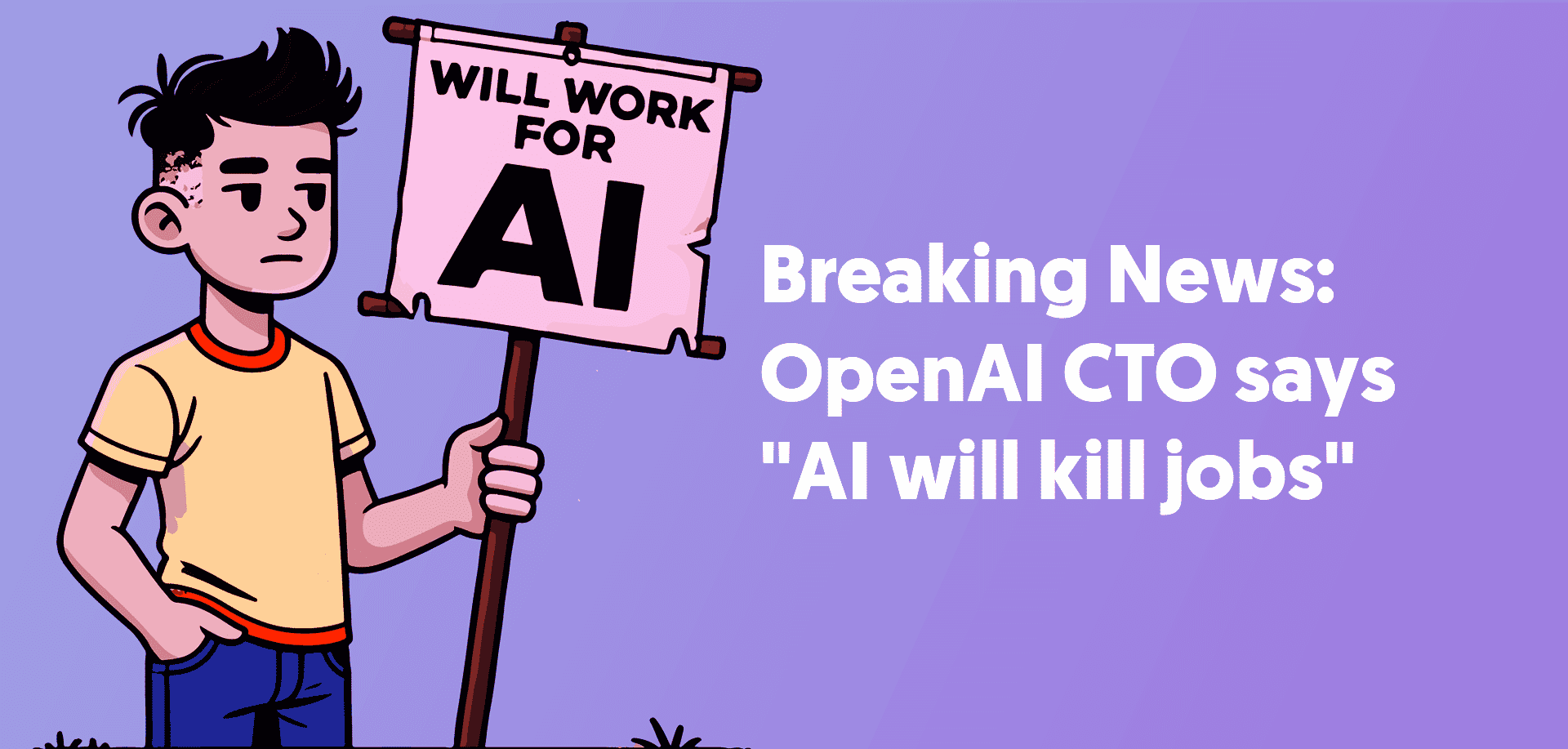
Let’s also not forget that OpenAI is terrible at eating its own dogfood when it comes to human capital management. Their own Chief People Officer just resigned. Their Fishbowl and Glassdoor comments read like a workplace thriller. And they haven’t exactly nailed transparency, DEI, or work-life balance.
So maybe they’re not the best authority on building fair, effective hiring platforms. Maybe.
But that doesn’t mean they won’t win. It just means they might not deserve to.
Which makes it totally fitting that the product is positioned as an heir apparent to LinkedIn, both within the company and throughout the industry. The harder they fall, as the saying goes.
The End of HR Tech (As We Know It), And I Feel Fine
This is the beginning of something new. And the end of something old.
Because this announcement makes one thing clear:
The companies that will define the future of hiring won’t come from the HR tech space. They’ll come from tech. Period.
Not because they understand recruiting. But because they understand users. Platforms. Distribution. Product velocity. Monetization. Ecosystem plays.
OpenAI’s Jobs Platform is a shot across the bow. Not just at LinkedIn, but at the entire HR tech industrial complex. And the only ones who still think this is a “feature war” are the vendors who haven’t realized they’ve already lost.
This is no longer about who has the best UX, or the most integrations, or the cleanest data model.
This is about who owns the platform where work happens, not simply where people look for work.
And it’s looking more and more like that’s going to be Microsoft and OpenAI, particularly since erstwhile challenger Google has already exited the AI recruiting arms race, well before it really even started.
Your move, Salesforce.
 Snark Attack
Thanks for the update, I unfortunately had missed this. And fully agree this might have a big impact, but it kind of feels like when Google Jobs launched and there was an expactation (rightly so) that this would obliterate jobboards and change the way candidates would look for a job (and this didn’t happen and Google lost interest).
Admittedly OpenAI has a lot of aces up their sleeve but they will need to really focus to crack this (and not sure if this is where they want to spend their resources)
Pingback: Why OpenAI’s Job Platform Isn’t About Jobs - Anita Lettink
Pingback: Openai announces a new employment platform, but will it fly? - Blue Bridge Manpower
Sounds very similar to what headhuntme.io is already doing in the UK
Pingback: Revamping High Volume Hiring Strategies | Snark Attack