Video Interviews Evolve: Zoom’s Strategic Move with BrightHire
When Sunset Boulevard Meets Sass
I want to tell you a story. Back when I was running social and employer content over at Monster (aka so long ago that it was actually an S&P 500 component, and dinosaurs ruled the Earth, and Taleo shipped its last update), I wrote a harmless little post on their employer resource center suggesting that companies film their hiring managers and embed those videos into job descriptions.
Nothing fancy. I pointed out that in fact, companies shouldn’t invest in video – for the recruitment marketing genre, Cinema Verite is the optimal style – a reference that was probably lost on those employers who paid agency retainers to make their career site look like a McG sizzle reel.

Then, as now, I suggested that all you need to make it not cringe was a simple introduction from the person a candidate would actually work for, talking about what the job is really like. Kind of like one of those director’s commentary tracks they used to stick on DVDs.
PS: Sorry, Gen Zers – not that you don’t get the reference, but you didn’t experience the joy waiting for Netflix to mail you DVD gems like Showgirls narrated by a drunk Paul Verhoven or Scorsese droning on about the cinematic influences of establishing shots or cutaways.
On the plus side, you did miss the whole Michael Moore thing.
I know. Shut up, old man.
Even though it was a different time, back when job boards were relevant and LinkedIn was an effective source of hire, you would have thought I suggested eliminating recruiters entirely.
Maybe I should have – I’d have been like 15 years early on that hype train. But I digress. And can, since this is my blog.
The outcry was immediate – we got dozens of angry client emails insisting that video would never be feasible, never be scalable, never be adopted in any serious way by talent acquisition.
I was right that video would eventually be another tool in the hiring toolbox. I just wish I would have been wrong.
Because once every hiring interaction moved onto a screen, the industry turned into an industry that rivals Bollywood in worthless video output – a jumble of recording notifications, AI “meeting copilots” that can’t even spell a candidate’s name correctly, and a much more expedient way to introduce bias in the hiring process.
Burying the Lede: Behind the M&A Scene
Welcome to the future, which is like Blade Runner, but boring, and Idiocracy is now entering the uncanny valley. Which brings us last week’s acquisition of Brighthire by Zoom,
I know – I’m all about cutting to the chase.
On the surface, this looks like a clean product story: Zoom wants to deepen its presence in hiring workflows, and BrightHire has already built a strong interview-intelligence layer on top of Zoom’s core infrastructure.
Under the surface, it is something else entirely. It’s a survival strategy for a meeting platform that knows the meeting itself has become a commodity.
Zoom still commands a huge global user base and remains a default choice for live conversations (at least, since Skype got sunsetted – pour one out). Its problem is not distribution. Its problem is relevance.
Video meetings today are a utility. Microsoft gives you Teams with Office. Google gives you Meet with Gmail. Every platform now records, transcribes, and offers AI summaries that are “good enough.”
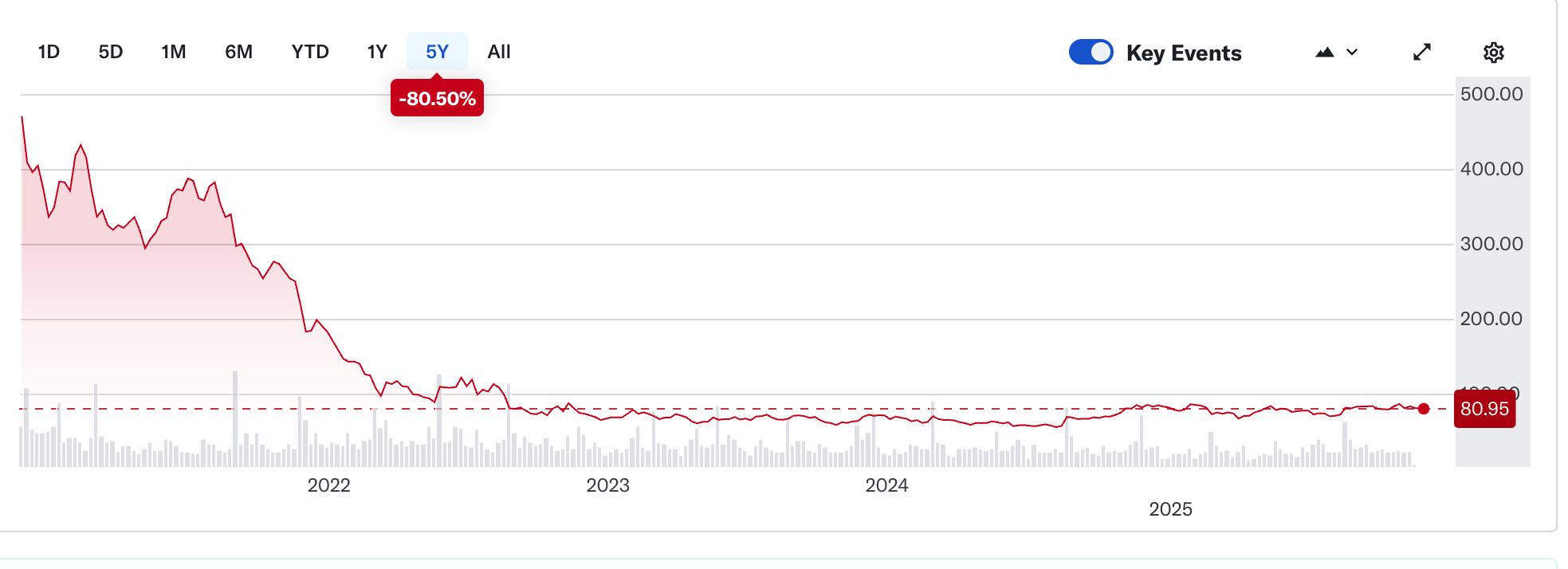
When everything is free, bundled, or built in, the meeting stops being the product. The workflow becomes the product.
Hiring is one of the few workflows where Zoom still plays a central, irreplaceable role. Even as companies return to hybrid schedules, video interviewing remains mainstream.
Research from semi credible organizations like SHRM and Deloitte has shown that virtual interviews didn’t fade post-pandemic; they stabilized into standard practice.
So Zoom had two realistic choices:
- Let third-party apps build the value around interviews, or
- Buy one of them.
BrightHire was the obvious candidate. Literally.
What BrightHire Actually Built
BrightHire didn’t build “Zoom with transcription.” Zoom already does that and has its AI Companion roadmap to make sure everyone knows it.
What BrightHire built was closer to a system of record for interviews. Real-time question prompts. Structured note-taking. Time-stamped transcripts. Automated summaries tied to evaluation criteria. Tight integrations with ATSs like Greenhouse and Workday. SOC 2 compliance and the enterprise-grade hygiene procurement teams demand.
In other words: while countless Chrome extensions can record calls, BrightHire built the connective tissue. It turned interviews into data.
It made Zoom not just the place where interviews happen, but the place where interview intelligence lives.
That’s what Zoom is buying. Not functionality. Positioning.
Because I’m still not sure any organization realistically needs any of this, or really what the hell “interview intelligence” even means.
Behind the Scenes: What “We’re Excited” Really Means
The public statements from BrightHire’s founders and Zoom’s ecosystem team are what you’d expect: a “next chapter,” “aligned missions,” “scaling impact,” and other phrases that appear automatically whenever a startup and a strategic acquirer shake hands.
Most of these posts live on LinkedIn, and reading between the lines, a few things become clear.
First, this deal was inevitable.
Zoom’s venture arm backed BrightHire years ago. Subsequently, BrightHire built its flagship experience directly inside Zoom, which repeatedly highlighted BrightHire in its App Marketplace. This was less a courtship and more a long and sloppy affair, followed by a quickie wedding that came out of nowhere.
Second, the “continuity” language is doing a lot of work.
When founders say, “We’ll continue our mission,” what they mean is:
“This is not an acquihire and your favorite features won’t disappear next quarter.”
Although this isn’t really up to them, it sounds reassuring. Customers likely worry, and rightfully so, that their data will be swallowed into a generic Zoom AI bucket. BrightHire is reassuring them that the product stays the product.
Third, there is zero clarity on packaging. And that silence is intentional. It means Zoom has not yet decided whether BrightHire becomes:
- A standalone add-on for enterprises hiring at scale,
- A wedge to sell Zoom deeper into HR tech budgets, or
- A feature of the broader AI Companion portfolio.
The smart bet is all three. Eventually.
The window of opportunity, though, is likely to close faster than this acquisition can have any impact on the viability or survival of what’s increasingly becoming a commoditized category.
It’s like Monster and CareerBuilder merging – scale is the only way to slow the inevitable forward march of technological progress (that, or bad PE bets).
Zoom, Out: Falling Towards A Dénouement
Zoom did not buy a moat. It bought breathing room.
Interview intelligence is quickly becoming something every platform claims to have. ATS vendors now ship built-in interview guides and scorecards.
Video platforms auto-summarize calls. Freemium note-taking tools like Otter and Fireflies attach themselves to calendar events whether you invite them or not.
Personally, I’m a big fan of Fathom, but there are literally more of these specious point solutions out there than there were sourcing startups in the age of social media.
The other thing is, at the same time that these providers’ margins and capability gaps are essentially flatlining, large enterprise platforms are embedding conversational and generative AI directly into recruiting flows.1
Consolidation Doesn’t Work When the Category Is Shrinking
Workday buying Paradox, for example, wasn’t about chatbots. It was about controlling conversational workflows inside the system of record. Zoom buying BrightHire is the same move in a different lane – and for the record, one that makes way less sense as a long term investment that might generate meaningful revenue increases somewhere along the roadmap.
The question for BrightHire inside Zoom becomes:
What can BrightHire do that Zoom’s core AI capabilities can’t eventually replicate for everyone?
Because when every meeting is recorded, transcribed, and summarized by default, the value shifts from “we captured the interview” to “we materially improved the hiring decision.”
That’s a much higher bar. And it’s one for which the business case is built almost entirely on causation, not actual correlation. Admittedly, the difference is probably lost if you still think that you need a specialized provider for any of these core use cases.
What This Means for Talent Acquisition Leaders
In the short term, nothing blows up.
If you’re a BrightHire customer, your CSM will assure you things stay the same. If you’re a Zoom customer who didn’t know BrightHire existed (guessing that’s a pretty overwhelming percentage of their total install base), expect to be invited to a product marketing webinar soon.
Longer term, this acquisition will impact how interview intelligence is sold, priced, and prioritized, both for the combined entity, and their myriad erstwhile competitors writ large.
- Interview features to creep into Zoom’s base product, raising expectations for every vendor in the category.
- AI becomes the center of Zoom’s hiring story, not video.
- More competitive pressure is placed on point solutions that can’t justify yet another contract when Zoom offers a “good enough” native baseline.
- Buyers have higher expectations, and will start asking for measurable improvements to quality of hire, not just cleaner notes.
In other words, Zoom has their work cut out for them. Winning might prove to be a pyrrhic victory, at best.
Eff, Stop: From Video to Workflow Solution
This acquisition is not about Zoom suddenly falling in love with HR tech. It’s about Zoom trying to rise above the commoditization of meetings. The meeting is free. The workflow costs money.
Talent acquisition happens to be a workflow where Zoom has massive native traffic and a clear path to monetization. BrightHire gives Zoom the conduit it was missing.
A much forgotten correlary of Occam’s Razor: the cynical interpretation is probably the correct one.
BrightHire gets distribution and a soft landing in a market where the standalone interview-intelligence category is getting squeezed.
Zoom gets a credible story about owning a critical part of the hiring workflow before Microsoft, Google, and the freemium swarm absorb it.
Everyone else gets a reminder that in the age of AI, the value isn’t in the conversation.
It’s in whatever sits on top of it.
Let’s just hope they’re ready for their closeup, because it’s unlikely to survive any sort of real scrutiny. But I’ve been wrong before. The continued existence of this category being, perhaps, the best proof of all.
 Snark Attack