The State of HR Industry Analysts 2025

A Guest Post by Joe Worsten, founder of The Worsten Institute, a thought leadership platform dedicated to thought-leading the thoughts of other thought leaders. All his insights are copyrighted, trademarked, and occasionally sponsored by a platform with three capital letters.

The HR world is changing fast, or at least that’s what we’ve been saying since the Industrial Revolution.
Today, we’re witnessing seismic shifts in workforce strategy, operating models, AI enablement, talent marketplaces, and whatever other trends are driving your existential angst.
Most critically, though, the HR profession is witnessing another evolution: the proliferation of analyst frameworks that exist solely to keep HR executives feeling like they’re “strategic” for attending a $3,500 webinar hosted by a guy who hasn’t worked in HR since “Friends” was still on air.
That guy is me. I am an analyst.
And I’m here to tell you that your HR function isn’t just behind the curve—it’s in the bottom-left quadrant of the Capability Maturity Map™. Don’t worry, though. For a reasonable fee, I can help you crawl your way into the “strategic” upper right.
All it takes is following a model I made up last Tuesday while eating a $27 airport salad.
Because if there’s one thing HR professionals love more than a good employee engagement initiative that no one engages with, it’s a brand-new analyst framework they can slap into a board deck and call strategy.
Why build consensus when you can just cite a chart made by someone who hasn’t had direct reports since “Diversity & Inclusion” only had one ampersand? Analysts, of course, understand this deeply. If you’re not familiar with what it is we do or what value we add, let’s start with the basics, first:
What Is an HR Analyst?
Let me break this down. We, the HR analysts, are the professional narrators of trends we didn’t discover, summarizers of research we didn’t conduct, and consultants for problems we helped invent.
- Need a solution? We’ve got a new market category.
- Need a market category? We’ve got a new acronym.
- Need an acronym? We’ve got ChatGPT and no shame.
We speak at conferences with names like “Future of People Now” or “HR Leadership: Reinvented, Reimagined, Replatformed™.”
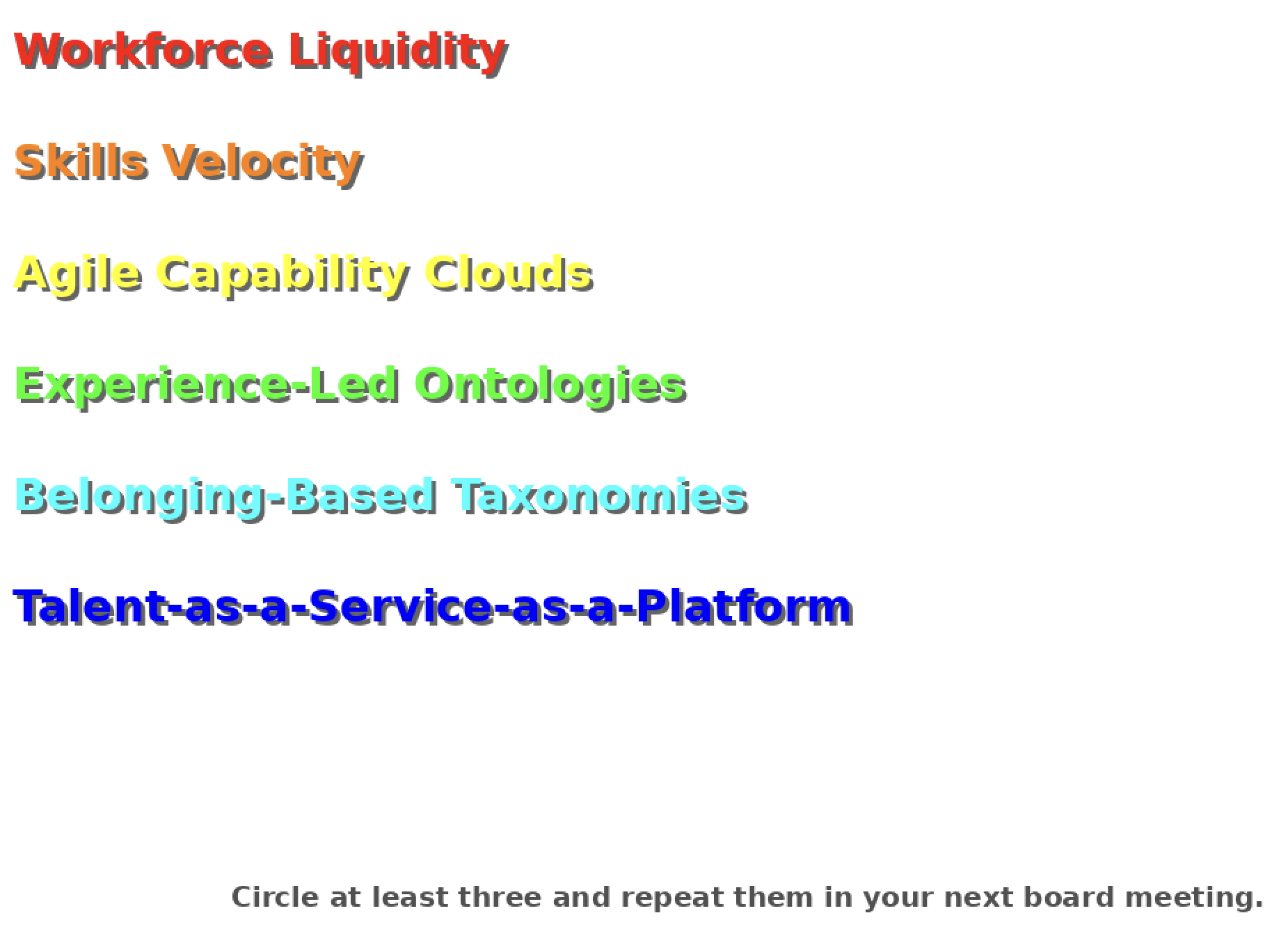
While frontline employees are asking for better pay, fair treatment, and psychological safety, we’re busy inventing new categories like “Holistic Capability Empowerment” and “Strategic Belonging Enablement” to justify the $25K subscription to our vaguely insightful PDFs.
Need a new acronym? We’ve got you covered. In the past 18 months, we’ve gone from LMS to LXP to TXP to EXX, and we’re currently beta-testing QWER-T. What does it stand for? Nobody knows. But trust me, it’s transformative.
We publish thought leadership on platforms that conveniently host our consulting services. We offer “exclusive” research that’s actually just last year’s trends, copy-pasted into a new Google Slide template with more purple.
But make no mistake: we are here to lead. And by “lead,” we mean monetize confusion.
The Analyst Industrial Complex: Building a Business Case
That’s why we’ve made not only a business out of it, but have essentially created what I like to refer to as “The Analyst Industrial Complex” (trademark pending). We’re like lobbyists, but with less regulation, looser disclosure requirements and a much more expensive hourly billing rate.
We don’t provide clarity. We provide narrative gravity. The illusion of understanding. A PowerPoint-safe way of saying “we’re doing something” without, you know, actually doing anything that could be measured or held accountable.

When considering whether or not you should work with an analyst, particularly for anyone overseeing a cost center that’s got little to no influence, credibility or demonstrable business value, remember:
- Once it’s in an infographic, it’s true.
- You don’t need accuracy. You need branding.
- You don’t need clarity. You need a quadrant.
- You don’t need a solution. You need a subscription.
Insight isn’t about accuracy. It’s about confidence. And no one delivers confidence—at scale—like an analyst with tenure, a team of ghostwriters, and a monthly retainer clause that auto-renews every 90 days.
I’ll Say It: The Analyst Is the Product
We’ve evolved from researchers into influencers, into institutions, and now, into brands. No one hires me to tell them what’s happening. They hire me so they can say they’re listening to me.
Why trust me? Because I’ve been in this game longer than most HR tech founders have been alive. Because my frameworks are cited by 3 out of 5 analysts who used to work for me. Because I once predicted that “employee experience” would matter, and now every SaaS platform claims to do it—even if none of them know what it means.

But mostly, because if you don’t, someone else will—and they’ll beat you to that budget approval with a 147-page benchmarking study I copy-pasted from last year’s survey. I’m like McKinsey, if McKinsey only operated on LinkedIn and measured impact in PDF downloads.
Here’s what you get when you book me:
- A 70-minute keynote that includes 37 slides, 12 acronyms, 4 maturity models, and at least 2 sweeping proclamations about skills.
- A “custom” research report that reuses 80% of last year’s content and inserts your logo for $15,000.
- The reassurance that, if anything goes wrong, you can blame “the pace of transformation” and not your own lack of execution.
So, what happens when I’m wrong? First of all: I’m never wrong. I’m just early. Like that time I said in 2018 that blockchain would revolutionize talent acquisition. Did it? No. Will it? Still no.
But do I still reference that slide deck in my “2025 Outlook” webinar? You bet your decentralized ass I do.
That’s the beauty of the analyst lifecycle: every missed prediction becomes a trend you just need to “reframe.” Every vendor that failed was “too early to market.” Success comes down to a simple formula:
- Pay us.
- Build something vaguely AI-ish.
- Call your product “a platform.”
Voila! You’re a market leader.
Introducing: The HR Analyst Maturity Model™
I know this sounds complex, and that’s intentional – because I’ve developed a new revenue stream – er, framework – for best navigating the sometimes esoteric and often obscure world of vendor relations.
After decades of charting the “future of work” with varying degrees of accuracy (and zero consequences), we’ve decided it’s time to look inward. To analyze the analysts. To bring a little rigor to the rigor mortis.
Why? Because nothing says “insight” like breaking your profession into arbitrary stages, ranking people without their consent, and trademarking the whole thing.
So I present to you the HR Analyst Maturity Model™, a five-stage framework for understanding the evolution of industry analysts. Because, as we all know, if you can’t categorize it into five boxes, it doesn’t really exist.
Stage 1: The Blogger
This is the analyst-in-training. Armed with a free Substack account and an unpaid LinkedIn Premium trial, they write long posts about how ChatGPT will “change everything.” They’ve never worked in HR, but they’ve read a lot of Gartner summaries and once shadowed their cousin’s onboarding call at Oracle.
Signature move: Using the word “transformational” to describe HRIS login screens.
Stage 2: The Framework Forager
Now published on Medium and doing unpaid panels. This analyst discovers Canva and starts building flowcharts using arrows that point to vague ideas like “people potential” and “next-gen work design.” They tweet confidently about skills-based organizations despite not knowing what a competency model is.
Signature move: Calling themselves a futurist. Regularly interviewed by podcasts with fewer than 12 listeners.
Stage 3: The Influencer-In-Residence
Now sponsored. Now keynote-ready. Now billing $15,000 for “fireside chats” where the fire is metaphorical and the chat is mostly buzzwords. They write reports using phrases like “human-centric agility stack” and “neuroinclusive EX frameworks” that no one reads but everyone cites.
Signature move: Quoting themselves in PowerPoint. Launching a think tank that consists of three interns and a Notion board.
Stage 4: The Institutionalized Analyst
Now fully entrenched in a boutique advisory firm. Their quotes are embedded in investor pitch decks. They release quarterly “Pulse Reports” that benchmark 40 companies nobody has heard of on KPIs no one actually tracks. Every answer they give starts with, “In our recent research…”
Signature move: Updating last year’s report by swapping “AI” with “GenAI,” then offering “deeper insights” for $7,999 per seat.
Stage 5: The Oracle, Sponsored by Oracle
This is peak analyst. Untouchable. Immortal. Hasn’t touched an HRIS in 20 years, yet somehow dictates vendor roadmaps and gets quoted in The Wall Street Journal whenever someone says “skills.” Speaks in TED Talk cadence. Refers to themselves in the third person. All predictions are vague enough to never be wrong, just “prematurely accurate.”
Signature move: Charging $75,000 for a 60-minute keynote where they show the same five slides they’ve been using since the Obama administration—just with new font.
Pulling It Out of Our AaaS
As someone who has been declared the “voice of the modern HR tech narrative” (by myself, last week, in a blog post sponsored by a vendor whose product I definitely did not influence), I feel it is my duty to finally bring accountability to the analyst ecosystem.
To do this, I’ve developed something the world desperately needed: The Analyst-as-a-Service™ Subscription.
For just $29,995/year, you get:
- Quarterly trend briefings with 3 months of recycled insight.
- A custom “readiness scorecard” that makes your CHRO look smart.
- Exclusive pre-release access to frameworks that haven’t even been backtested.
- And for our Enterprise+ tier? I’ll say nice things about your platform on stage. No one will know. Everyone will believe it.
The future of work isn’t about transformation. It’s about translation—turning ambiguity into billable insights.
So the next time you hear someone say “skills-based organization,” just nod, add it to a deck, and say “as outlined in the research.” I promise I’ve got a chart for it. Whether it’s accurate doesn’t matter. Whether it feels strategic? That’s the magic. And if all else fails, just build a new maturity model.
Because the future of work isn’t just something you predict. It’s something you trademark.
About the Author:
Joe Worsten, founder of The Worsten Institute, a thought leadership platform dedicated to thought-leading the thoughts of other thought leaders.
He charges $9,500 for a 60-minute strategy session, $24,000 for a workshop, and will personally bless your HR tech launch for $45K if you send him a branded merch in a flattering color.
 Snark Attack
So appreciate “I’m never wrong. I’m just early.”
I am overjoyed to have found this, thanks for posting.
Pingback: Incompetency Framework: The Truth About Skills Based Hiring | Snark Attack
Brilliant satire. This all rings so, so true — and you’ve still left a lot unsaid.
Pingback: The Devil You Know: Do We Really Need HR Technology? | Snark Attack
Pingback: When Dinosaurs Ruled: Why the OpenAI Jobs Platform Could Be An HR Tech Extinction Event | Snark Attack
Pingback: Buzzwords in Recruiting: A Survival Guide for 2026 | Snark Attack