You’re Not Talent. You’re Inventory.

I recently came across a LinkedIn post by Gem founder Steve Bartel, who has come to the conclusion that recruiting, in fact, is a sales function, not an HR function.
Of course this argument has been going on in this industry ad nauseam. You will notice that recruiting, to recruiters, is always anything but; depending on who you ask, it’s customer service, or brand marketing, or some sort of specialized comms function (or, rarely, HR).

But recruiters have always seen the function as something more than simply filing reqs – a sentiment rarely shared with candidates or hiring managers. Thus, the need to question – and justify – our fundamental place in the organizational hierarchy.
Thing is, while this existential discussion about what recruiting really is seems as cliched as an extended metaphor about hiring being like dating – it’s only recently become a conversation that’s more factual than theoretical.
Recruiting is no longer recruiting, at least as we know it. Human capital has long been a commodity; so too, now, is the process by which we obtain that capital
Pipelines, Not People: Taking the Talent Out of TA
Talent acquisition, at least writ large, is no longer about building relationships, “getting to know candidates,” or even about people, really. It’s about pipelines. Workflows. Throughput. Velocity. Optimization. You know the buzzwords by now. But it’s the sentiment behind them that necessitates a shift in how we think about how we hire.
Welcome to recruiting today — where human capital isn’t just an asset. It’s inventory.
Now, let me be clear: this isn’t a value judgment. It’s just a fact. Recruiting has always been a numbers game. We’re just finally admitting it. And once you see it, you can’t unsee it: recruiting has evolved into a supply chain function.
And not just metaphorically — functionally, operationally, even linguistically. Our systems, processes, and goals now mirror supply chain logistics more than they do traditional HR. Or even “traditional” corporate TA, if such a thing exists.
Once you understand the basics of supply chain management, it becomes painfully obvious why your hiring goals feel less like “strategic workforce planning” and more like hitting quarterly order fulfillment quotas.
So, for all the talent leaders who don’t have even a perfunctory understanding of supply chain management, here’s your crash course in how you accidentally became a supply chain manager — and what that means for the future of recruiting.
COGS In The Machine
At its core, supply chain management is about getting the right product, to the right place, at the right time, for the right cost. Sound familiar? Replace “product” with “candidate,” and you’ve basically described your headcount plan.
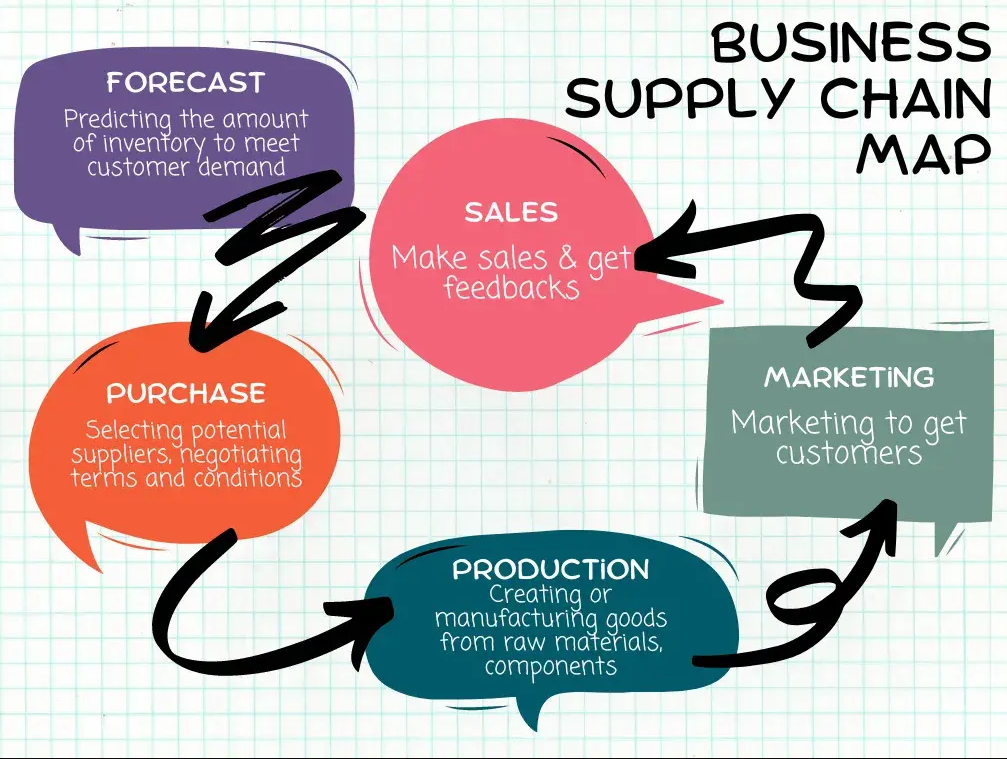
The supply chain includes everything from raw materials and procurement to production, warehousing, transportation, and delivery. And if you think about recruiting, we’ve adopted every single one of those steps — just with a lot more Zoom calls.
Let’s break it down:
- Sourcing is procurement (where it’s also referred to as “sourcing,” for what it’s worth).
- Interviewing and prescreening are production
- Assessments are QA
- Your offer and onboarding process are logistics
- And when Finance tells you they need 250 engineers in Prague by Q3, well, that’s demand planning.
And the biggest similarity? In both cases, everything falls apart when the forecast is wrong, the pipeline breaks, or there’s a bottleneck upstream.
That’s Logistics: Pipelines, Prescreens and Process Management
Recruiting didn’t wake up one day and decide to become supply chain.
We were pushed — by technology, by executive expectations, and by the brutal math of modern business.
Here’s how we got here, in three simple steps.
The Rise of Data & Automation
ATS and CRM didn’t just digitize our processes — they commoditized them. Once you can measure something, you can optimize it. Once you optimize it, you can automate it. And once you automate it, you stop thinking about “people” and start thinking about “units.”
Hiring velocity. Cost-per-hire. Time-to-fill. All that feels eerily like warehouse KPIs — because it is.
The Collision of TA & FP&A
Talent acquisition now reports into Finance almost as often as it does into HR. And even when we don’t, we’re funded by models built in Excel by someone who thinks a candidate is just a line item in a budget.
If you’ve ever been asked to “increase funnel yield” or “optimize sourcing spend,” congratulations — your job has already been reclassified as supply chain.
The Candidate As Algorithm
AI doesn’t care about culture fit. It doesn’t know if someone’s a team player or a jerk. It just knows the resume matches the requisition. Which, again, is exactly how inventory works: a SKU either meets the order criteria or it doesn’t. No nuance, no context — just fill rates and false positives.
As of 2025, over 67% of enterprise hiring workflows now involve at least one AI-based automation step, according to Deloitte’s annual Global Human Capital Trends report. And nearly half of those companies report using AI primarily to reduce cost-per-hire, not improve candidate experience.
That tells you exactly who the customer is in this supply chain — and spoiler alert, it’s not the candidate.
Talent Isn’t Strategic. It’s Inventory.
Look, calling humans “inventory” sounds dystopian. But inventory isn’t inherently dehumanizing. In supply chain terms, inventory is just the stuff you need to deliver your product or service.
It’s capital — the lifeblood of the business. And managing it well is the difference between growth and collapse.
Same goes for talent. If you don’t have the right people, you can’t ship product, close deals, serve customers, or innovate. And if your “inventory” runs dry — say, a labor shortage or a skills mismatch — you’re looking at serious operational risk.
That’s not TA. That’s a faulty supply chain.
According to the U.S. Chamber of Commerce, 75% of companies reported talent shortages in 2024. That’s not a recruiting problem. That’s a systemic supply chain failure. And just like in physical logistics, the answer isn’t “recruit harder.”
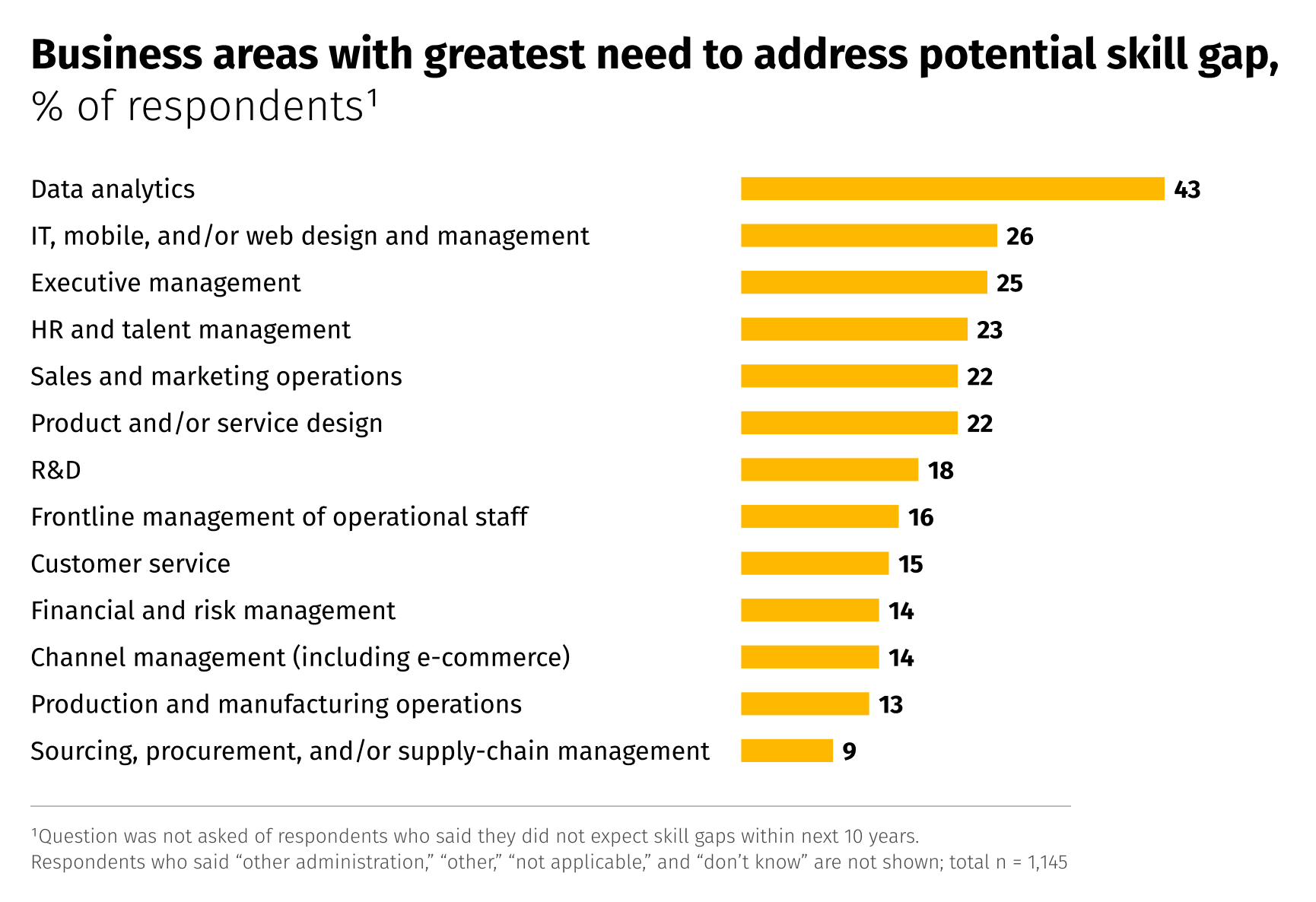
It’s to rethink the entire hiring process, but instead, in the context of what it truly is: the human capital supply chain.
From demand forecasting (workforce planning), to vendor diversification (talent sourcing) to just-in-time fulfillment (talent marketplaces and contingent workers), to inventory redundancy (succession planning and internal mobility), we’re not really filling reqs so much as we’re fulfilling orders.
In fact, many top-performing companies already treat workforce strategy as a supply chain function. Amazon, for example, has a dedicated “Workforce Optimization” team that sits within Operations, not HR – and let’s agree this is a company that deeply understands the vagaries of procurement and supply chain management.
Ultimately, their entire hourly labor strategy — from candidate marketing to shift allocation — is managed like warehouse capacity planning: scalable, flexible, and ruthlessly efficient. They’re not alone – in fact, most “high volume hiring” is predicated on the understanding that recruiting, as most TA practitioners know it, is really inventory management.
“Now Hiring,” in effect, is really “just in time” inventory management.
Rethinking “Relationship Recruiting”
In other words, many employers are adopting a talent acquisition strategy that’s functionally the antithesis of traditional, relationship based recruitment – and, turns out, it’s an approach that’s way more effective at scale – and more sustainable, too.
Some folks will say this is all a tragic loss — that we’ve traded human connection for dashboards and algorithms. And yeah, I get the nostalgia. But let’s be real: hiring at scale is a logistics problem now. When you’re trying to fill 10,000 roles across 14 markets, “getting to know people” isn’t a strategy. It’s a bottleneck.
This doesn’t mean stuff like emotional intelligence, cultural alignment, or candidate experience don’t matter. They absolutely do — but not as standalone values.They matter because they improve conversion, reduce churn, and increase throughput. In other words, they’re part of your supply chain metrics now, whether you like it or not.
The best recruiters I know aren’t “people people.” They’re process people. Systems thinkers. Demand planners. They know how to move talent through a funnel the same way supply chain managers move semiconductors from Shenzhen to Saint Louis. They speak the language of business — which, by the way, isn’t recruiting.
It’s operations. It’s revenue. It’s risk mitigation. Because let’s be honest: no CEO is losing sleep over your candidate NPS. But they will absolutely freak out if your “inventory” doesn’t show up on time and in spec. The sooner recruiting starts thinking in those terms, the more influence – and viability – our profession will actually have.
And, ultimately, the more successful we’ll get at actually making hires, too.
 Snark Attack
Agree 100% Matt.
Steve Seeberg at GlobalPros.ai, contributing to “Supply Chain” automation.
Pingback: Talent News Round-Up: Big Four Entry Level Jobs, Inventory, and Stakeholder-Centric Metrics - Spotlight Data
Pingback: Employer of Record: Solution or Shell Game? | Snark Attack
Pingback: Referred Candidates & Meta Recruitment News | HRX
Pingback: Still Crazy After All These Metrics: The Myth of Quality of Hire | Snark Attack
Pingback: Talent Acquisition Trends to Watch in 2026 | Snark Attack